

A patient calls at 4:50 p.m. with worsening shortness of breath. Another needs to reschedule a follow-up. A third is frustrated because a prescription has not reached the pharmacy. To the person answering the phone, these may arrive seconds apart. But they do not carry the same urgency, and handling them as if they do can create risk for patients and pressure for staff.
Clinic phone triage gives practices a consistent way to recognize urgent concerns, route routine requests, and make sure callers feel heard. Done well, it protects the patient experience without asking front-desk employees to make clinical judgments beyond their role.
What Clinic Phone Triage Is Designed to Do
Phone triage is the process of gathering key information from a caller and following an approved protocol to determine the next step. That step may be an emergency instruction, a warm transfer to a nurse, a same-day appointment request, a message for the care team, or a standard scheduling workflow.
The goal is not to diagnose over the phone. It is to move each caller toward the appropriate level of attention as safely and efficiently as possible. For a busy clinic, that distinction matters. A receptionist should not have to decide whether symptoms are clinically serious, and a nurse should not have to spend time sorting through routine calls that could have been scheduled or resolved through a clear process.
A reliable approach also gives patients confidence. They may be anxious, in pain, or unsure whether their concern warrants care. A calm, professional response can reduce uncertainty even when the next step is simply to send a message or schedule the next available visit.
Why Phones Become a Bottleneck for Clinics
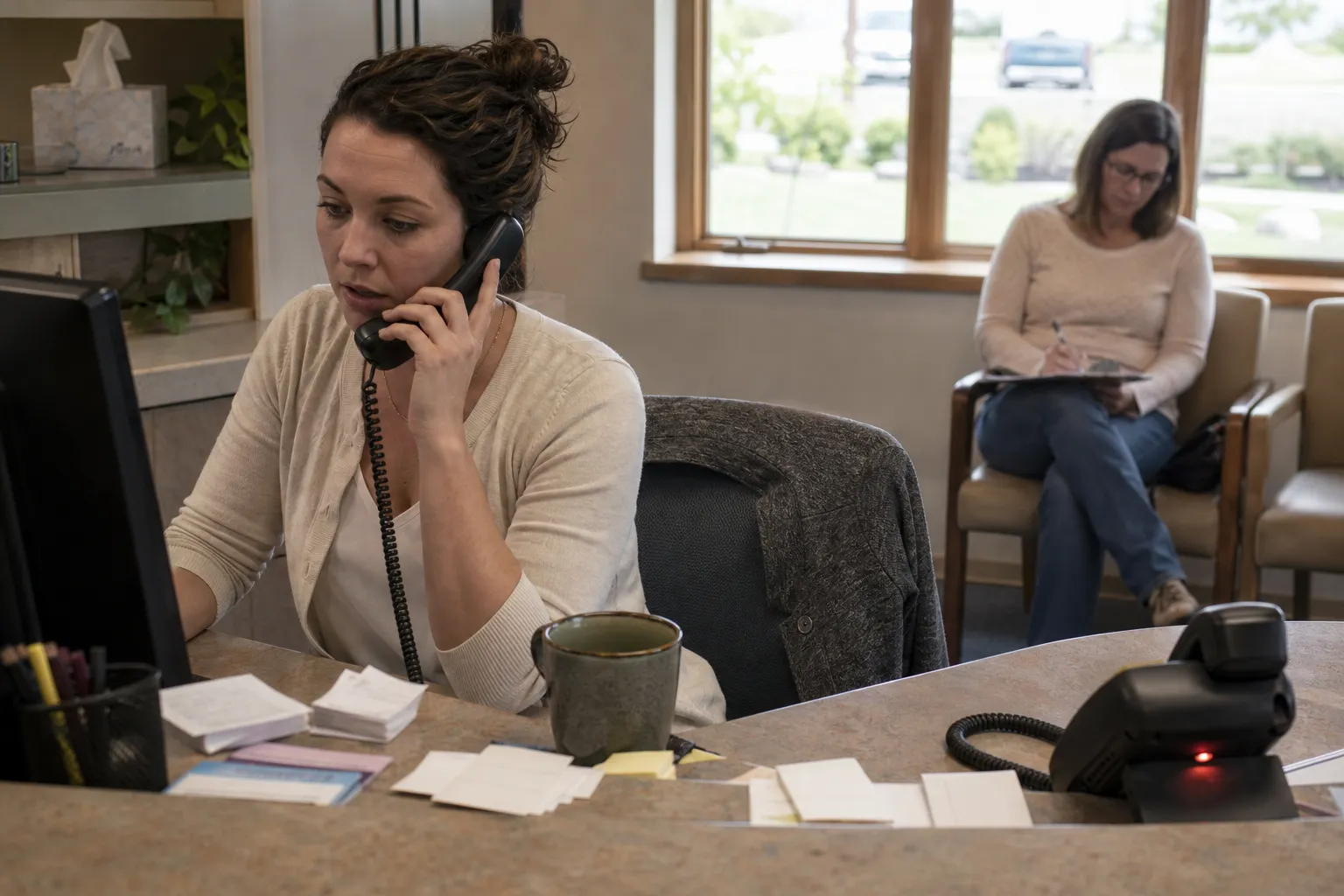
Most clinics do not struggle because their staff lacks commitment. They struggle because calls are unpredictable. Volume often rises during lunch hours, before closing, after a holiday, during seasonal illness, or when a provider is unexpectedly unavailable. One employee may be checking in patients, collecting paperwork, and answering a ringing phone at the same time.
When phones are treated as an interruption rather than a core part of patient access, several problems follow. Calls go to voicemail. Messages are incomplete. Patients call repeatedly. Front-desk teams feel rushed, and clinical staff receive unclear notes that require a second call for basic details.
The operational cost is more than inconvenience. A missed call can mean a patient delays care, an appointment slot goes unfilled, or a frustrated family member looks for another provider. It can also pull skilled staff away from the work only they can perform.
The Building Blocks of Effective Clinic Phone Triage
Strong triage begins with a clear division of responsibilities. Nonclinical call handlers should use approved scripts and escalation rules, while licensed clinical staff retain responsibility for medical assessment and advice. This protects patients, staff, and the practice.
Start With a Consistent Call Intake
Every call does not need a lengthy questionnaire. It does need accurate basics. The caller’s name, callback number, patient relationship, reason for the call, relevant provider or location, and preferred response timing are often enough to begin. For symptom-related calls, the approved script should guide the agent toward the specific details the clinical team needs.
Accuracy matters as much as speed. “Patient is not feeling well” is not an actionable message. “Patient reports new dizziness since this morning, is alone at home, and requests nurse guidance” gives the receiving team a clearer starting point.
Build Escalation Rules Before the Phone Rings
The safest triage programs do not rely on an agent’s instinct. They establish written instructions for urgent symptoms, emergency situations, medication requests, test-result questions, referral issues, scheduling, billing, and after-hours calls.
Emergency guidance must be simple and direct. If a caller describes symptoms included in the clinic’s emergency protocol, the agent should follow the approved instruction immediately, such as advising the caller to contact emergency services or go to the nearest emergency department. The agent should not reassure, interpret symptoms, or delay escalation while attempting to collect unnecessary information.
Not every concern is an emergency, of course. The practical value of a protocol is that it helps staff distinguish between calls requiring immediate escalation and calls that can be documented for a timely clinical response. The exact rules should reflect the specialty, patient population, provider preferences, and compliance requirements of the practice.
Route Routine Requests Without Creating Extra Work
A large share of clinic calls are administrative. Patients need appointment scheduling, directions, office hours, insurance information, refill status, or help updating contact details. These calls deserve a professional response, but they should not automatically reach a nurse or provider.
Clear routing reduces needless handoffs. If a properly trained agent can schedule according to clinic rules, document a cancellation, or explain the process for submitting a records request, the internal team can stay focused on patients in front of them. For more complex requests, the agent can send a complete, properly categorized message to the right queue.
Where Outsourced Coverage Can Help
Some practices have sufficient in-house coverage during normal hours but need help during lunch, high-volume periods, staff absences, or evenings. Others need a dependable first point of contact around the clock. In either case, outsourced answering support can extend the clinic’s capacity without requiring the practice to recruit, train, and schedule a larger internal reception team.
The quality of that support depends on how closely the program matches the clinic’s workflow. A generic answering service that merely takes names and numbers will not solve a triage problem. The service needs custom scripts, current escalation contacts, clear transfer rules, secure message delivery, and regular review with clinic leadership.
For healthcare organizations, local, professionally trained agents can make a meaningful difference. Callers are often sharing sensitive concerns, and they can quickly sense whether the person answering is attentive and prepared. Customer Elation builds customized call-management programs around a client’s protocols, helping clinics maintain a consistent, empathetic front door when internal staff cannot answer every call.
How to Set Up a Clinic Phone Triage Program
Start by reviewing a representative sample of recent calls. Look for repeated reasons patients contact the office, calls that took too long to resolve, messages that lacked necessary detail, and times when call volume exceeded staffing. This is often where the most useful improvements become visible.
Next, involve the people who receive the calls after they are documented. Nurses, providers, scheduling staff, and practice managers should agree on what information they need and how quickly each category of message should be addressed. A workable system reflects the real clinic workflow, not an idealized one.
Then create scripts that sound human. A script should help an agent lead a call with confidence, not turn them into a recording. It should include approved language for identifying the caller’s need, confirming important details, setting response expectations, and escalating urgent concerns. Staff should know exactly what they may say and what must be referred to a clinical professional.
Finally, test the process under pressure. What happens if the nurse line is busy? Who receives a message after hours? What if a patient calls twice because they have not heard back? How are providers notified of a time-sensitive concern? These questions should have clear answers before a difficult call exposes a gap.
Measure More Than Call Volume
Call counts are useful, but they do not tell the full story. A clinic should also watch abandoned calls, average response time, message completeness, transfer accuracy, appointment conversions, repeat-call patterns, and patient feedback. A rising number of repeat calls may indicate unclear follow-up expectations. A high transfer rate may mean agents need better scripts or additional scheduling authority.
Reviewing call outcomes regularly also keeps protocols current. New providers, modified office hours, changing referral requirements, and seasonal surges can all affect how calls should be handled. Triage is not a document to file away. It is an operational process that needs practical maintenance.
The best clinic phone triage programs make patients feel less like a problem to be processed and more like people who reached the right place. When every caller receives a calm response, a clear next step, and accurate follow-through, the phone becomes a stronger part of patient care rather than another source of strain for the practice.








Leave A Comment